week seven, research
To develop the ideas behind my piece I have done some
further research on Dissociative Identity Disorder (DID), including the cause,
symptoms and some people’s personal experience with living with this disorder.
Firstly, I discovered that the cause of this illness is likely
to be an attempt to disconnect from a memory of severe traumatic event in a
person’s past. This complex psychological disorder is thought to be a way of
coping with haunting memories of a damaging experience, for example physical or
emotional abuse. However, a person may also dissociate due to a current
situation, such as dealing with stressful issues or difficult and complicated
relationships. By disconnecting from their identity and feelings, the mind no
longer has to handle the violent, emotional and frightening thoughts that are
consuming the affected person. I would therefore like to explore including
moments which show a remembrance of the past and then quickly trying to forget
it through a change of direction or dynamic.
The main piece of research which will be important for my
choreography is the symptoms of DID and how this causes someone to feel,
because these are the emotions that I want to portray in my piece. Some
symptoms include:
- Memory loss – a person may dissociate so much that they allow themselves to completely forget the traumatic event that happened to them
- Feeling disconnected from the world around you and your own body – like you are a stranger to yourself
- Identity confusion - losing a sense of who you are
- Losing control of your body movements
- Feeling empty and confused
- Having changes in identity and potentially forgetting your original identity
(website 1), (website 3)
These will all be particularly important for me to remember whilst
creating my movement as I want to correctly portray the disorder to give the
audience the correct understanding of it. However, in order to help me even
further, I have looked into some people’s personal experiences with DID. I read
an anonymous account of life with Dissociative Identity Disorder and I was particularly
interested when they described their different identities as being ‘voices’ and
‘like shadows’ that they notice from time to time. I was surprised to discover
that they sometimes found their recurring voices comforting, as they became
familiar and normal for them to hear. For example, this person in particular had
an experience in which they felt anxious and overwhelmed in a shopping centre,
but when they heard ‘Jim’s voice’ console them, they immediately felt relaxed
and calm. Therefore, I would also like to show how these changes in identity
can both be unexpected and frightening and somewhat comforting and safe. (website 2)

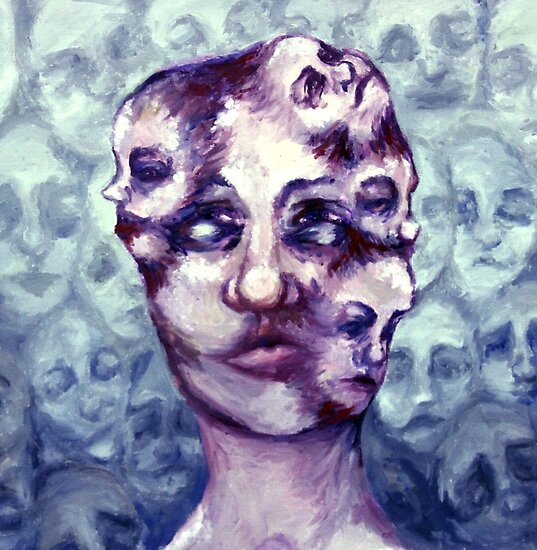
Looking more closely at having changes in identity, I discovered that the mind switches between different identities in what are called ‘episodes’, which can last seconds, minutes, or even days. Each of these identities have their own age, sex and race and can have their own posture, gestures, mannerisms and way of talking, making each one unique and unpredictable. This will allow me to explore a variety of dynamics in my solo, as I can portray opposing identities through a range of characteristics/adjectives as inspiration.
Websites that I used for my research:
In text (website 1) : Bhandari, Smitha. “Dissociative Identity Disorder (Multiple Personality Disorder): Signs, Symptoms, Treatment.” WebMD, WebMD, 22 July 2019,
https://www.webmd.com/mental-health/dissociative-identity-disorder-multiple-personality-disorder#1-2
In text (website 2) : Anonymous. “My Life with Dissociative Identity Disorder.” SANE Australia, 26 Mar. 2018, https://www.sane.org/information-stories/the-sane-blog/my-story/my-life-with-dissociative-identity-disorder
In text (website 3) : “What Is Dissociation and Dissociative Identity Disorder (DID)?” What Are the Signs and Symptoms of Dissociation and Dissociative Disorder?, https://www.rethink.org/advice-and-information/about-mental-illness/learn-more-about-conditions/dissociation-and-dissociative-identity-disorder-did/?gclid=Cj0KCQjw6KrtBRDLARIsAKzvQIGHDADQ9JFSJQSAj3BsXk4dKLYdP9y-mZxgVocb-lTsCOVnRKrYsmIaAiZZEALw_wcB

This comment has been removed by a blog administrator.
ReplyDeleteThis comment has been removed by the author.
DeleteSorry Storm, I accidentally deleted your comment however I know that you asked me why the idea of feeling empty and confused would be important in my piece.
DeleteThese particular emotions are especially important in showing how an affected person may feel trapped by their own mind and silenced by the abuse or trauma that they faced in their past. By portraying these emotions with full commitment, my performance will become much more powerful, engaging and believable for the audience and will also help me to achieve my starting objective of successfully conveying the symptoms of DID through my expressions and movement.
You have made a good start researching behind your final idea. You have clearly described what the piece will be about and have used research to give depth and greater understanding behind your idea. Further, discus how your observations will influence your piece and enhance your creative work as you move forward. In relation to the criteria, I would say that the post currently sits around the 2:1 mark; if you wish to increase this towards a 1:1, you should think about; what objectives have you set? How will you ensure your idea successfully comes across to the audience? It is important that you remember to reference your research within your writing. Additionally, think about how you can further your research to develop your idea as well as the movement and characteristics of your creative piece.
ReplyDeleteAs I move forward, my research will alter the structure for my piece, as I now see different areas that I would like to explore in my dance. Originally, I had hoped to have one repeating section that was interrupted by smaller sections (each representing an identity). However, after looking further into the symptoms of DID, I would now like my piece to have less of a rigid structure and to instead focus on creating the feelings and emotions of a person with this disorder. I would also like to include a section which alludes to some sort of abuse or trauma, so that I can show the cause of DID in my piece as well as the symptoms. To help me to convey these emotions correctly I will need to be completely committed in my performance and to almost exaggerate the emotions that I am portraying in order for them to successfully come across to the audience. To further my research, I feel as though it would be interesting for me to perhaps watch someone in a DID episode or a documentary about the disorder, so that I can truly understand how dramatic the alteration in identity is and how this affects their facial expressions and body language. By seeing this myself I think it would help me to emulate this more precisely in my own performance, making my piece more believable and impactful for the audience.
DeleteThis is a very well developed blog I really enjoyed reading, you have covered a wide range of research which is full of interesting facts and ideas. I particularly like how you have started to develop the research you found into choreographic ideas.
ReplyDeleteYou mentioned that you found the idea of the different identities 'voices' interesting. How will you represent the multiple 'voices' into your choreography? What kind of movements will you use to display these 'voices'?
Thankyou Louisa. To convey the idea of 'voices', I will repeat tapping my head in various places, symbolising the different identities popping up in different areas of the brain. I will also walk around in a circle with my head slightly lingering back to represent the idea of a voice trailing behind in the distance, or an identity like a shadow. Changes in direction throughout my piece will also reflect these voices appearing at unexpected moments for the affected person and will show how they dictate and control what the person does.
DeleteWell done! you have clearly put in a lot of effort into your research and have presented your ideas coherently.
ReplyDeleteYou mentioned how the 'voices' can be seen as comforting, why have you chosen to show a slightly more positive aspect of the symptoms?
Thankyou, I have chosen to show this more positive aspect because I want my piece to be as accurate and authentic as possible and due to the fact that this was how someone with DID feels, I thought it would only enhance my work to include it. Furthermore, from a creative point of view, this would also allow me to explore some opposing and varied dynamics and emotions throughout my piece, making it more interesting for the audience.
DeleteI really enjoyed reading this post and all the research you have looked into for it and it has genuinely fascinated me.
ReplyDeleteHave you have any idea of what type of dynamics you will use for each identity you have mentioned above?
Now that I am towards the end of the process, I can say that in the end my piece didn't show different identities themselves, but instead the feelings created for the person affected due to these identities. However, if I had continued with this idea, I would have explored contrasting dynamics, for example sharpness and delicacy, or impulse and hesitation.
Delete